



 Share on Facebook
  Post to X
  Share on LinkedIn
  Share on Reddit
 Asset Sale Description
An Intervention Program for Additional Math Instruction
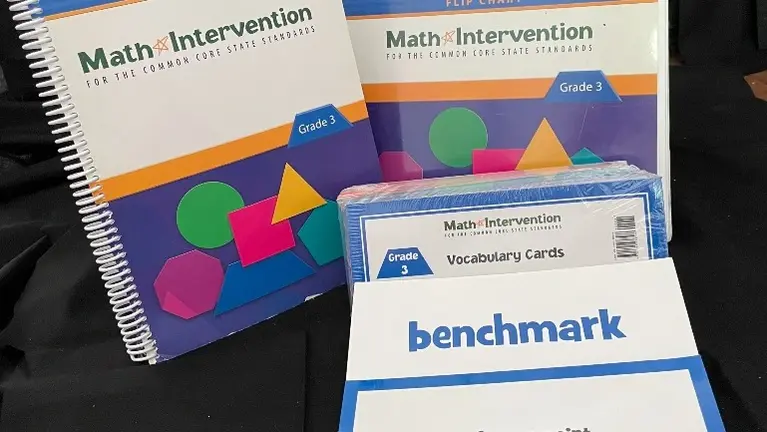
Math Intervention is a direct intervention Program that gives support to students who need additional math instruction. Created for use during an extra instructional period per day, the program helps students focus on non-mastered standards. The Math Intervention Teacher Guides contain instructional material for two grades - the designated grade level and the grade level below. There is a lesson for every standard, and every standard usually has three examples or
more accompanied by a visual.
Math intervention has been designed for use by a variety of school personnel, including:
Classroom teachers Parent volunteers
Student teachers Special Ed/Resource teachers
Classroom aides and other paraprofessionals
Establishing Intervention Groups
Educators can identify students needing intervention by using the program's pretests and other data sources that are available for making instructional decisions. Achievement is accelerated as students receive instruction only in the standards in which they are deficient. Math Intervention is uniquely designed so that any of the content areas or combination of content areas can be taught in any order, thus making the intervention powerfully responsive to the specific needs of students.
Working with the Materials
The interventionists who use Math Intervention appreciate the easy-to-follow, scripted lessons that are color coded for ease in distinguishing between directions and explanations. During the lessons, a flip chart, dry erase boards, and manipulatives are used to provide visual clues and interaction to improve comprehension and internalization of the math standards. Data collected in the pretests and grade-level tests are compared in order to move students in and out of the intervention as needed. Teachers should read over the material before teaching in order to assure the intervention is implemented with fidelity.
Measuring Success
Grade level tests should be given at the completion of a content area to measure the success of the intervention. Students should show improvement at 80% or better after completing instruction.
How to Use Math Intervention
No set time to cover the deficient standards for any one content area has been designated because the pacing depends upon the needs of the students in the intervention group and how quickly they can move through the material. The interventionist does need to move at a brisk pace to insure time on task is beneficial.
Pretest
The pretest covers material one year below grade level.
Test all students or those the teacher thinks may need intervention.
The pretest is to be read to the students by the interventionist.
The scores will identify those students needing intervention.
There is no set percentage for determining who should be placed in an intervention group/groups.
Teachers may select their four lowest-scoring students to participate, set their own percentage and form several groups or decide on another choice.
Getting Ready for Instruction
Gather your materials.
Review the vocabulary list for the content area you are covering.
Divide the cards into two groups: terms and definitions.
Assemble the Flip Chart by placing the sheets you wlll be using in sheet protectors.
Read through the script.
Instruction
Instruct by modeling the given examples before the teacher asks questions or before the teacher asks students to complete work.
Move quickly through the material.
Vocabulary must be a daily part of the instruction.
Focus the instruction time on the deficient standards.
The recommended time of instruction is 30 minutes a day.
Include computation practice.
Grade Level Tests
Upon completion of the instruction the Grade-level Test is given.
Intervention students are expected to show improvement at 80% or better on the Grade-level Test.
Next Steps
Begin the process again for another domain by choosing to administer its pretest.
more accompanied by a visual.
Math intervention has been designed for use by a variety of school personnel, including:
Classroom teachers Parent volunteers
Student teachers Special Ed/Resource teachers
Classroom aides and other paraprofessionals
Establishing Intervention Groups
Educators can identify students needing intervention by using the program's pretests and other data sources that are available for making instructional decisions. Achievement is accelerated as students receive instruction only in the standards in which they are deficient. Math Intervention is uniquely designed so that any of the content areas or combination of content areas can be taught in any order, thus making the intervention powerfully responsive to the specific needs of students.
Working with the Materials
The interventionists who use Math Intervention appreciate the easy-to-follow, scripted lessons that are color coded for ease in distinguishing between directions and explanations. During the lessons, a flip chart, dry erase boards, and manipulatives are used to provide visual clues and interaction to improve comprehension and internalization of the math standards. Data collected in the pretests and grade-level tests are compared in order to move students in and out of the intervention as needed. Teachers should read over the material before teaching in order to assure the intervention is implemented with fidelity.
Measuring Success
Grade level tests should be given at the completion of a content area to measure the success of the intervention. Students should show improvement at 80% or better after completing instruction.
How to Use Math Intervention
No set time to cover the deficient standards for any one content area has been designated because the pacing depends upon the needs of the students in the intervention group and how quickly they can move through the material. The interventionist does need to move at a brisk pace to insure time on task is beneficial.
Pretest
The pretest covers material one year below grade level.
Test all students or those the teacher thinks may need intervention.
The pretest is to be read to the students by the interventionist.
The scores will identify those students needing intervention.
There is no set percentage for determining who should be placed in an intervention group/groups.
Teachers may select their four lowest-scoring students to participate, set their own percentage and form several groups or decide on another choice.
Getting Ready for Instruction
Gather your materials.
Review the vocabulary list for the content area you are covering.
Divide the cards into two groups: terms and definitions.
Assemble the Flip Chart by placing the sheets you wlll be using in sheet protectors.
Read through the script.
Instruction
Instruct by modeling the given examples before the teacher asks questions or before the teacher asks students to complete work.
Move quickly through the material.
Vocabulary must be a daily part of the instruction.
Focus the instruction time on the deficient standards.
The recommended time of instruction is 30 minutes a day.
Include computation practice.
Grade Level Tests
Upon completion of the instruction the Grade-level Test is given.
Intervention students are expected to show improvement at 80% or better on the Grade-level Test.
Next Steps
Begin the process again for another domain by choosing to administer its pretest.
Detailed Information
- Years in Operation
- 13
- Facilities & Assets
- The buyer will receive all the digital files for grades K-8, such as the Teacher Guide, Flip Chart, Vocabulary Cards, Standard Flash Cards, and Lesson Videos for grades 2-5.
About the Sale
- Transition Support
- I am available as consultant.
- Seller Motivation
- I am retired and wish to devote my time to other things.
- Financing
- None
Listing Info
- ID
- 2522317
- Listing Views
- 90
Attached DocumentsAttachment Disclaimer
Listing ID: 2522317 The information on this listing has been provided by either the seller or a business broker representing the seller. BizQuest has no interest or stake in the sale of this business and has not verified any of the information and assumes no responsibility for its accuracy, veracity, or completeness. See our full Terms of Use. Learn how to avoid scams.
Similar Listings

Saved Businesses limit reached.
Remove some Saved Businesses.
Remove some Saved Businesses.

