Golf Shaft / Carbon Fiber Tubing Factory
 Share on Facebook
  Post to X
  Share on LinkedIn
  Share on Reddit
 Start-Up Description
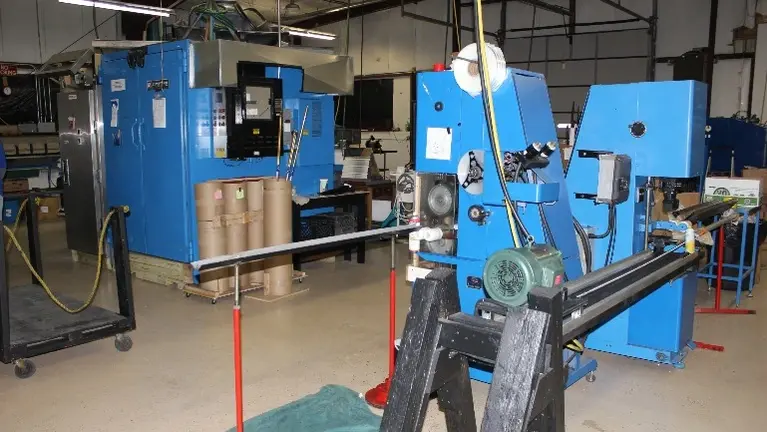
These specialized machines were engineered to produce cylindrical carbon fiber tubes with precision and consistency. The facility served as a core hub for the research, development, and testing behind a significant share of modern golf shaft innovation. As advanced materials continue to evolve, the platform offers substantial opportunity for further technological advancement and product development. Ownership of this factory represents a strategic opportunity to lead the next generation of golf shaft design, engineering, and manufacturing.
All golf shafts we have produced have received “First Article” and “Conformity” endorsements from the United States Golf Association (USGA) on certain models of shafts. The bulk of this machinery was once part of the largest golf shaft manufacturing operation in California before Americans shipped the labor to Asia. It once produced an estimated 80% of the world’s golf shaft supply for +20 years. Since re-locating to Michigan much of this machinery has been re-built and re-engineered in addition to some specialized machines made to compliment these to quickly produce a wide variety of diameters and lengths without any time or calibration change. Industries we've produced products for include Golf, Cross Country ski poles, walking poles, snowshoe poles, cane, karate/ martial arts, archery, blind sticks, snake handling sticks, bike polo, archery arrows-bolts-bow stabilizers, kayak shafts, kite structures, drone parts, industrial support and repair. Carbon continues to replace traditional materials such as metal and wood due to its light weight, superior strength, durability, resistance to weather, heat, and sun exposure.
In the past five years, the golf industry has seen a massive shift toward carbon fiber (graphite) shafts, which are rapidly closing the gap on traditional metal (steel) shafts. While steel still holds a majority of the market for irons, carbon fiber has achieved near-total dominance in drivers and is now the fastest-growing segment in the sport.
________________________________________
Key Trends Driving the Change
1. The "Speed Revolution" (2021–2026): Amateur participation spiked following the 2020 lockdowns, bringing millions of new players into the game. These players overwhelmingly prioritize distance and ease of use. Carbon fiber shafts are generally 20–50 grams lighter than steel, allowing for higher clubhead speeds and easier launch.
2. Professional Adoption in Irons: Historically, graphite irons were seen as "for seniors or women." That stigma has vanished in the last five years. High-profile pros like Bryson DeChambeau and Jason Day have switched to high-end graphite iron shafts (like the Fujikura Axiom or LA Golf series), proving that carbon fiber can provide the same stability as steel with better vibration dampening.
Summary of the Last 5 Years:
o Drivers/Woods: Metal shafts have essentially become obsolete. Carbon fiber is the 100% standard.
o Irons: In 2021, graphite iron shafts were a niche choice for high-speed players. By 2026, they have become a "premium performance" category used by all demographics.
o Overall User Base: While exact "person-by-person" counts are difficult to track, market revenue for carbon fiber shafts has increased by roughly $150M–$200M since 2021, while steel revenue has remained relatively flat or grown only through price increases rather than volume.
Since irons are now being replaced by carbon fiber, this market just increased 7X.
See the attachment in this listing for more details.
All golf shafts we have produced have received “First Article” and “Conformity” endorsements from the United States Golf Association (USGA) on certain models of shafts. The bulk of this machinery was once part of the largest golf shaft manufacturing operation in California before Americans shipped the labor to Asia. It once produced an estimated 80% of the world’s golf shaft supply for +20 years. Since re-locating to Michigan much of this machinery has been re-built and re-engineered in addition to some specialized machines made to compliment these to quickly produce a wide variety of diameters and lengths without any time or calibration change. Industries we've produced products for include Golf, Cross Country ski poles, walking poles, snowshoe poles, cane, karate/ martial arts, archery, blind sticks, snake handling sticks, bike polo, archery arrows-bolts-bow stabilizers, kayak shafts, kite structures, drone parts, industrial support and repair. Carbon continues to replace traditional materials such as metal and wood due to its light weight, superior strength, durability, resistance to weather, heat, and sun exposure.
In the past five years, the golf industry has seen a massive shift toward carbon fiber (graphite) shafts, which are rapidly closing the gap on traditional metal (steel) shafts. While steel still holds a majority of the market for irons, carbon fiber has achieved near-total dominance in drivers and is now the fastest-growing segment in the sport.
________________________________________
Key Trends Driving the Change
1. The "Speed Revolution" (2021–2026): Amateur participation spiked following the 2020 lockdowns, bringing millions of new players into the game. These players overwhelmingly prioritize distance and ease of use. Carbon fiber shafts are generally 20–50 grams lighter than steel, allowing for higher clubhead speeds and easier launch.
2. Professional Adoption in Irons: Historically, graphite irons were seen as "for seniors or women." That stigma has vanished in the last five years. High-profile pros like Bryson DeChambeau and Jason Day have switched to high-end graphite iron shafts (like the Fujikura Axiom or LA Golf series), proving that carbon fiber can provide the same stability as steel with better vibration dampening.
Summary of the Last 5 Years:
o Drivers/Woods: Metal shafts have essentially become obsolete. Carbon fiber is the 100% standard.
o Irons: In 2021, graphite iron shafts were a niche choice for high-speed players. By 2026, they have become a "premium performance" category used by all demographics.
o Overall User Base: While exact "person-by-person" counts are difficult to track, market revenue for carbon fiber shafts has increased by roughly $150M–$200M since 2021, while steel revenue has remained relatively flat or grown only through price increases rather than volume.
Since irons are now being replaced by carbon fiber, this market just increased 7X.
See the attachment in this listing for more details.
About the Business
- Facilities & Assets
- Assets are in a month-to-month rental facility. All palatable to be relocated quickly. 3-Phase power and require air pneumatics for most machines. The factory is green - no toxic waste or hazardous byproducts. Proprietary information is part of the value within the technology for carbon types, layering application, and cure cycles. Machines are high production-low maintenance. Easy to set-up, plug in, and begin production. We will handle logistics to prepare, deliver, set-up, and even offer training of all machines and technology upon purchase.
About the Sale
- Transition Support
- Each step of the manufacturing process can be learned within days; most are low skill labor. Full support to learn and apply the proprietary information, efficient industrial know-how, set-up and on-site training.
Replacement parts for the machinery can still be purchased from the OEM.
See attachment for market size, asset and IP value.
Listing Info
- ID
- 2463601
- Listing Views
- 402
Attached DocumentsAttachment Disclaimer
Listing ID: 2463601 The information on this listing has been provided by either the seller or a business broker representing the seller. BizQuest has no interest or stake in the sale of this business and has not verified any of the information and assumes no responsibility for its accuracy, veracity, or completeness. See our full Terms of Use. Learn how to avoid scams.
Similar Listings